“Life is a journey, not a destination.”
Ralph Waldo Emerson, (1803 - 1882)
Report Update

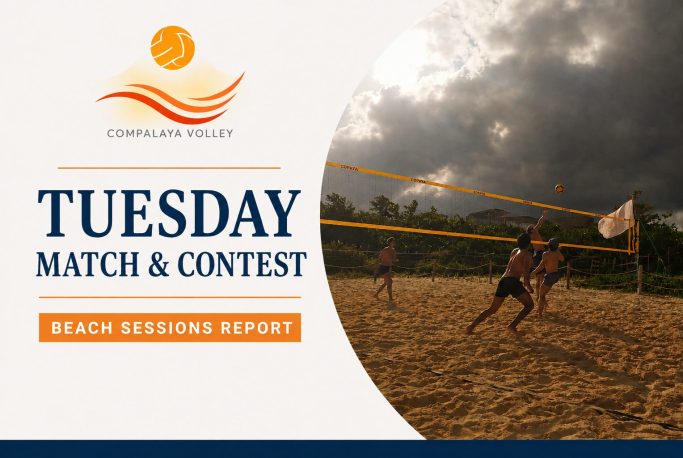
Today’s Tuesday volley session had one clear objective: increasing the athlete work ethic and developing the mindset required to perform as an athlete.
The session brought together experienced players already familiar with this environment — Gretel (MEX), Philip (GER) and Roman (ESP) — together with newer session players who have been involved for less than six months: Clement (FRA), Tony (MEX) and Dr. Luis (MEX).
The objective was not simply to play volleyball.
The objective was to work, build, improve — and never be satisfied with standing still.
There is a difference between a player and an athlete.
A player comes to play.
An athlete comes to develop — and then play.
Real athletic development requires purpose, adaptability, discipline, concentration and the ability to continue working when the session becomes difficult.
The First Step — Learning to Work Through the Hard
Wanting to train and perform well is only the beginning. The next step is learning to continue working when the body becomes tired, concentration becomes difficult and technical execution is not perfect.
That is where mentality is built.
The session demanded both work ethic and technical finesse. Working hard without learning is not enough.
An athlete must learn to work hard — and work correctly.
Senior Players — Leading by Example
Gretel (MEX), with her background as a former collegiate and Mexico NVL player, and Philip (GER), an athlete in his own right from Germany, demonstrated this mentality through their behaviour and game play.
Their focus, endurance, concentration and attention to technical detail created a clear example for the newer players.
Together with Coach Michael, they helped create the competitive platform for the teams. Gretel and Philip also took responsibility for helping guide Clement and Tony during the session.
Leadership in a team is not about telling somebody what to do.
Leadership in a team is showing them how it is done.
Toward the end, Clement and Tony continued to work. Their focus became stronger, technical execution improved and their game became more structured as the matches progressed.
This is only the initial step.The journey continues.
For Clement and Tony, the challenge is to continue building the work ethic, understanding and consistency required to develop from players into athletes.
For Gretel and Philip, the challenge is different: to perfect gameplay, sharpen technique, improve decision-making and refine the details that separate a good performance from a complete performance.
The process never stops.
There is always another detail to improve and another level of consistency to reach.
That is the purpose of these sessions.
Not perfection. Progress.
A player develops when things go well.
An athlete develops when things become difficult — and chooses to continue working.
The mindset is built through the work — session after session.
Well done to all.

La sesión de voleibol del martes de hoy tuvo un objetivo claro: aumentar la ética de trabajo del atleta y desarrollar la mentalidad necesaria para rendir como atleta.
La sesión reunió a jugadores experimentados que ya están familiarizados con este entorno — Gretel (MEX), Philip (GER) y Roman (ESP) — junto con jugadores más nuevos que llevan menos de seis meses participando en las sesiones: Clement (FRA), Tony (MEX) y Dr. Luis (MEX).
El objetivo no era simplemente jugar voleibol.
El objetivo era trabajar, construir, mejorar — y nunca conformarse con quedarse en el mismo lugar.
Existe una diferencia entre un jugador y un atleta.
Un jugador viene a jugar.
Un atleta viene a desarrollarse — y después a jugar.
El verdadero desarrollo deportivo requiere propósito, capacidad de adaptación, disciplina, concentración y la capacidad de continuar trabajando cuando la sesión se vuelve difícil.
El primer paso — aprender a trabajar cuando las cosas se ponen difíciles
Querer entrenar y rendir bien es solamente el comienzo. El siguiente paso es aprender a continuar trabajando cuando el cuerpo se cansa, la concentración se vuelve difícil y la ejecución técnica no es perfecta.
Ahí es donde se construye la mentalidad.
La sesión exigió tanto ética de trabajo como precisión técnica. Trabajar duro sin aprender no es suficiente.
Un atleta debe aprender a trabajar duro — y trabajar correctamente.
Jugadores senior — liderando con el ejemplo
Gretel (MEX), con su experiencia como exjugadora universitaria y de la liga NVL de México, y Philip (GER), un atleta en su propio derecho de Alemania, demostraron esta mentalidad a través de su comportamiento y su juego.
Su concentración, resistencia, disciplina y atención a los detalles técnicos crearon un claro ejemplo para los jugadores más nuevos.
Junto con Coach Michael, ayudaron a crear la plataforma competitiva para los equipos. Gretel y Philip también asumieron la responsabilidad de ayudar y guiar a Clement y Tony durante la sesión.
El liderazgo en un equipo no consiste en decirle a alguien qué hacer.
El liderazgo en un equipo consiste en mostrarle cómo se hace.
Hacia el final, Clement y Tony continuaron trabajando. Su concentración se hizo más fuerte, la ejecución técnica mejoró y su juego se volvió más estructurado a medida que avanzaban los partidos.
Este es solamente el paso inicial. El camino continúa.
Para Clement y Tony, el desafío es continuar construyendo la ética de trabajo, la comprensión y la consistencia necesarias para desarrollarse de jugadores a atletas.
Para Gretel y Philip, el desafío es diferente: perfeccionar el juego, afinar la técnica, mejorar la toma de decisiones y perfeccionar los detalles que separan una buena actuación de una actuación completa.
El proceso nunca se detiene.
Siempre hay otro detalle que mejorar y otro nivel de consistencia que alcanzar.
Ese es el propósito de estas sesiones.
No perfección. Progreso.
Un jugador se desarrolla cuando las cosas salen bien.
Un atleta se desarrolla cuando las cosas se vuelven difíciles — y decide continuar trabajando.
La mentalidad se construye a través del trabajo — sesión tras sesión.
Buen trabajo a todos.
Volleyball Member Engagement Report – Beach Volleyball
first step toward building the professional athlete mindset on colosio beach
Date: September 22, 2026
Report Update
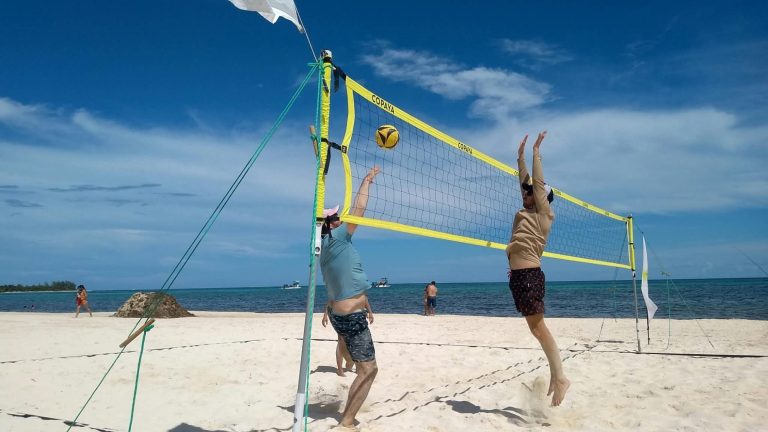
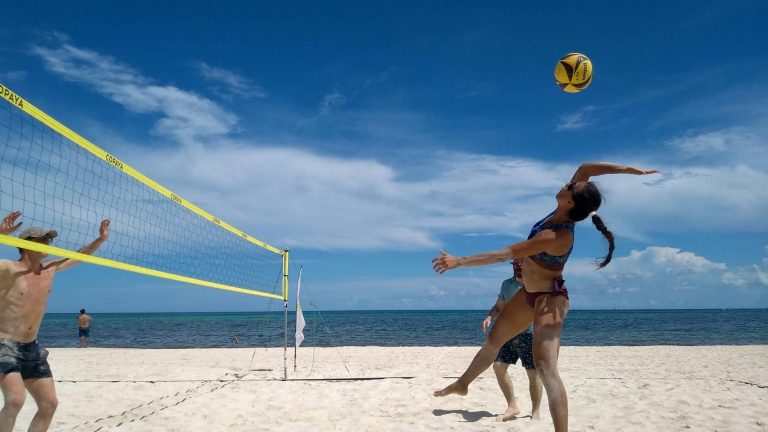
Under medium-strong wind, strong midday sun and high UV exposure, today’s Tuesday session intentionally placed the players in a demanding environment where environmental stress had to be mastered as part of the training impact.
With Alex (MEX), Clément (FRA), Gretel (MEX) and Tony (MEX), Coach Michael introduced the principles of Cognitive Motor Inhibition focus (CMIT) and Spatial Awareness Calibration focus (SACT) before transferring them into drills and then into game situations.
The work focused on reading the situation, controlling the first impulse, calibrating movement and making the correct next decision. The drills were designed to force concentration and reduce reliance on normal automatic responses.
During game play, Coach Michael corrected the players directly on court. Changing senior-team combinations, including Gretel and Alex, added further demands for communication, adaptation and partner correction.
The impact became visible especially in Clément and Tony. They were working with concepts that were new to them, so the goal was not immediate perfection. The goal was to experience the process, understand it, apply it and create a first base for further development.
New skills require repetition before they become automatic.
The same principle applies to team play. Tony and Gretel want to compete together in a mixed tournament. Their knowledge and experience are different, but that is not a weakness. A team of two does not need identical players. They need to understand their differences, compensate for each other and work toward the same objective.
This is the idea behind Tuesday at Comp@laya Volley:
Close the gaps in practical experience, knowledge and guidance.
Players who are willing to leave their normal game level, accept correction and work through unfamiliar situations create the foundation for better performance.
It does not need to be perfect at the beginning.
Understand it. Apply it. Repeat it. Automate it. Use the knowledge in real time and build consistency.
Well done to all players today, especially Tony and Clément, who pushed beyond their normal limits on their early volleyball journey, challenged their consistency and maintained the focus under demanding conditions.
That commitment to consistency is the standard professional players work toward.
That is where development begins.
Bajo condiciones de viento medio-fuerte, fuerte sol del mediodía y alta exposición a rayos UV, la sesión de este martes colocó intencionalmente a los jugadores en un entorno exigente, donde el estrés ambiental debía ser dominado como parte del impacto del entrenamiento.
Con Alex (MEX), Clément (FRA), Gretel (MEX) y Tony (MEX), Coach Michael introdujo los principios del enfoque de Inhibición Motora Cognitiva (CMIT) y del enfoque de Calibración de la Conciencia Espacial (SACT), antes de transferirlos a los ejercicios y posteriormente a situaciones de juego.
El trabajo se centró en leer la situación, controlar el primer impulso, calibrar el movimiento y tomar la siguiente decisión correcta. Los ejercicios fueron diseñados para exigir concentración y reducir la dependencia de las respuestas automáticas habituales.
Durante el juego, Coach Michael corrigió directamente a los jugadores en la cancha. Los cambios en las combinaciones de los equipos senior, incluyendo a Gretel y Alex, añadieron mayores exigencias de comunicación, adaptación y corrección entre compañeros.
El impacto se hizo especialmente visible en Clément y Tony. Estaban trabajando con conceptos nuevos para ellos, por lo que el objetivo no era alcanzar la perfección inmediata. El objetivo era experimentar el proceso, comprenderlo, aplicarlo y crear una primera base para continuar desarrollándose.
Las nuevas habilidades requieren repetición antes de convertirse en automáticas.
El mismo principio se aplica al juego en equipo. Tony y Gretel quieren competir juntos en un torneo mixto. Su nivel de conocimiento y experiencia es diferente, pero eso no es una debilidad. Un equipo de dos no necesita jugadores idénticos. Necesitan comprender sus diferencias, compensarse mutuamente y trabajar hacia el mismo objetivo.
Esta es la idea detrás de los martes en Comp@laya Volley:
Cerrar las brechas en experiencia práctica, conocimiento y orientación.
Los jugadores que están dispuestos a salir de su nivel habitual de juego, aceptar correcciones y trabajar en situaciones desconocidas crean la base para un mejor rendimiento.
No tiene que ser perfecto al principio.
Comprenderlo. Aplicarlo. Repetirlo. Automatizarlo. Utilizar el conocimiento en tiempo real y desarrollar consistencia.
Buen trabajo de todos los jugadores hoy, especialmente de Tony y Clément, quienes superaron sus límites habituales en esta etapa inicial de su recorrido en el voleibol, pusieron a prueba su consistencia y mantuvieron el enfoque bajo condiciones exigentes.
Ese compromiso con la consistencia es el estándar hacia el que trabajan los jugadores profesionales.
Ahí es donde comienza el desarrollo.

Volleyball Member Engagement Report – Beach Volleyball
CMIT & SACT Focus detail work on tuesday volley sessions
Date: September 15, 2026
Report Update
Today’s Tuesday session was deliberately different.
Coach Michael stepped back.
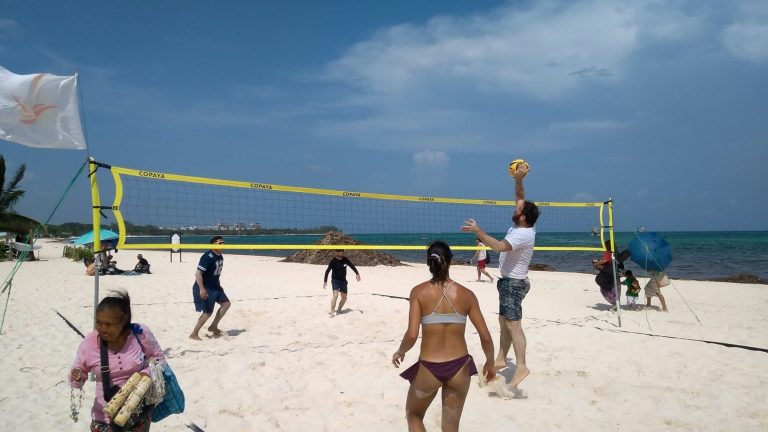
Instead of constantly intervening, the teams had to find their own solutions through communication, adaptation and partner adhesion.
THE RULES WERE CLEAR
3 contacts — otherwise lost point.
1st & 2nd contact with two hands/arms mandatory — otherwise lost point, except in an emergency.
Communication. Adaptation. Team responsibility.
The experienced players — Sergio, Dotan and Alex — were challenged to support the less experienced and guest players Clement, Farz and Fernando.
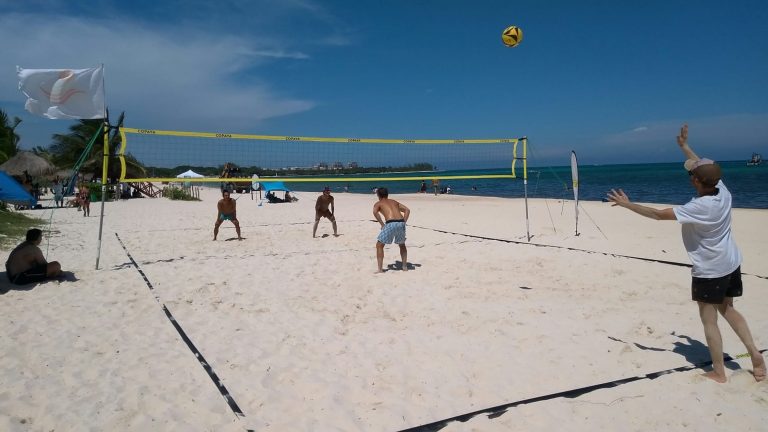
The session brought together Dotan (ISR), Sergio (MEX), Alex (MEX), Dr. Luis (MEX), Clement (FRA), Farz (UK) and Fernando (MEX) under brutal midday sun, strong UV exposure and light-to-moderate wind, while preparing for competition.
WHEN THE COACH STEPS BACK
The question was simple:
Can the players solve the game together?
Who takes the ball?
Who covers?
Who adapts?
Who supports the partner?
Who changes the strategy?
This is where Collective Adhesion becomes visible.
Dotan & Clement showed strong adaptation, while Fernando & Alex also developed a clear working partnership.
Other team combinations struggled to find their common strategy.
That is not failure. That is learning.
EXPERIENCE HAS A RESPONSIBILITY
Experience is not simply about playing better.
It is about helping the partner become better.
Sergio, Dotan and Alex were challenged to provide stability through communication, adaptation and support, rather than controlling the game.
The extreme heat became part of the challenge. Dotan and Sergio were affected by the heat and competitive intensity, while Farz and Clement had to manage the extreme sun and UV exposure.
They remained open to the challenge and pushed through their assigned game situations.
THE COACHING LESSON
Coach Michael was intentionally in the backseat.
Sometimes the best coaching is knowing when not to coach.
When the coach always provides the solution, players wait for it.
When the coach steps back, players must read, communicate, adapt and solve together.
Individual Adaptation → Two-Player Collective Adaptation
The goal is not simply to put two good players together.
It is to create a partnership where both players become better by adapting to each other.
Do not expect your partner to adapt to you. Adapt to your partner. That is where the real team begins.
Today’s Tuesday session was deliberately different.
Coach Michael stepped back.
Instead of constantly intervening, the teams had to find their own solutions through communication, adaptation and partner adhesion.
THE RULES WERE CLEAR
3 contacts — otherwise lost point.
1st & 2nd contact with two hands/arms mandatory — otherwise lost point, except in an emergency.
Communication. Adaptation. Team responsibility.
The experienced players — Sergio, Dotan and Alex — were challenged to support the less experienced and guest players Clement, Farz and Fernando.
The session brought together Dotan (ISR), Sergio (MEX), Alex (MEX), Dr. Luis (MEX), Clement (FRA), Farz (UK) and Fernando (MEX) under brutal midday sun, strong UV exposure and light-to-moderate wind, while preparing for competition.
WHEN THE COACH STEPS BACK
The question was simple:
Can the players solve the game together?
Who takes the ball?
Who covers?
Who adapts?
Who supports the partner?
Who changes the strategy?
This is where Collective Adhesion becomes visible.
Dotan & Clement showed strong adaptation, while Fernando & Alex also developed a clear working partnership.
Other team combinations struggled to find their common strategy.
That is not failure. That is learning.
EXPERIENCE HAS A RESPONSIBILITY
Experience is not simply about playing better.
It is about helping the partner become better.
Sergio, Dotan and Alex were challenged to provide stability through communication, adaptation and support, rather than controlling the game.
The extreme heat became part of the challenge. Dotan and Sergio were affected by the heat and competitive intensity, while Farz and Clement had to manage the extreme sun and UV exposure.
They remained open to the challenge and pushed through their assigned game situations.
THE COACHING LESSON
Coach Michael was intentionally in the backseat.
Sometimes the best coaching is knowing when not to coach.
When the coach always provides the solution, players wait for it.
When the coach steps back, players must read, communicate, adapt and solve together.
Individual Adaptation → Two-Player Collective Adaptation
The goal is not simply to put two good players together.
It is to create a partnership where both players become better by adapting to each other.
Do not expect your partner to adapt to you. Adapt to your partner. That is where the real team begins.
Volleyball Member Engagement Report – Beach Volleyball
experience has a responsibility on tuesday volley session
Date: September 1st, 2026