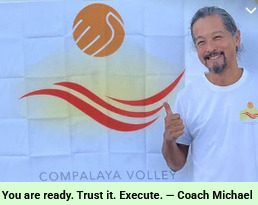
“Life is a journey, not a destination.”
Ralph Waldo Emerson, (1803 - 1882)
Report Update

In our beach and indoor sessions, especially in preparation for tournaments and competitive matches, we see a clear pattern. And our Compalaya coaches—like Coach Michael and Coach Andrea—address it in a distinctive way: precise, consistent, and present. Small corrections, during and outside of play—sometimes verbal, sometimes just a look, a signal, a short cue. Always guiding.
Players perform well in static drills. The technique is there. The structure is there. The understanding is there.
But when the environment changes—competition, pressure, lack of cohesion—performance drops.
Why? Because technique alone is not enough. Without mental control, technique cannot be delivered when it matters.
What we build in Compalaya Volley sessions is the bridge:
from controlled training to uncontrolled reality.
We train players to stay calm, steady, and to manage the fear every player carries—the fear of losing, making mistakes, not executing. We don’t avoid it—we face it. That is where mental toughness begins.
Mental toughness is not something you talk about—it is something you live.
It is staying focused and committed when conditions are against you—tight score, errors, unstable team dynamics. That is where real performance starts.
And be clear: this is not talent. This is trained, the 4 C's of mental toughness.
It is control —of emotions and reactions.
Commitment —to your process.
Acceptance of challenge .
Confidence —built through repetition.
It is resilience after mistakes.
Consistency under all conditions.
Emotional stability when others lose control.
So how do we build it—differently?
We create pressure, not avoid it.
We move from drills into real game situations.
We coach with precision, not overload.
We make weaknesses visible—and work on them.
We build discipline through routine, not motivation.
And we keep the focus on what can be controlled: effort, attitude, execution.
Anyone can perform in a drill.
Only disciplined players perform in competition.
Mental toughness is not about being “macho.” It is about control—of yourself, in every moment.
Control this—and your technique, decisions, and performance become reliable.
This is what we build in our sessions:
calmness under pressure, clarity in chaos, and focus when it matters.
That is the difference between training and performing.
Coach Michael

En nuestras sesiones de playa e indoor, especialmente en la preparación para torneos y partidos competitivos, observamos un patrón claro. Y nuestros entrenadores de Compalaya—como Coach Michael y Coach Andrea—lo abordan de una manera distintiva: precisa, constante y presente. Pequeñas correcciones, durante y fuera del juego—a veces verbales, a veces solo una mirada, una señal, un pequeño gesto. Siempre guiando.
Los jugadores rinden bien en ejercicios estáticos. La técnica está ahí. La estructura está ahí. El entendimiento está ahí.
Pero cuando el entorno cambia—competencia, presión, falta de cohesión—el rendimiento baja.
¿Por qué? Porque la técnica por sí sola no es suficiente. Sin control mental, la técnica no se puede ejecutar cuando realmente importa.
Lo que construimos en las sesiones de Compalaya Volley es ese puente:
del entrenamiento controlado a la realidad no controlada.
Entrenamos a los jugadores para mantenerse calmados, estables, y para gestionar el miedo que todos llevan—el miedo a perder, a cometer errores, a no ejecutar correctamente. No lo evitamos—lo enfrentamos. Ahí es donde comienza la fortaleza mental.
La fortaleza mental no es algo de lo que se habla—es algo que se vive.
Es mantenerse enfocado y comprometido cuando las condiciones están en contra—marcador ajustado, errores, dinámica de equipo inestable. Ahí comienza el verdadero rendimiento.
Y que quede claro: esto no es talento. Esto se entrena—las 4 C de la fortaleza mental.
Control —de las emociones y reacciones.
Compromiso —con tu proceso.
Aceptación del desafío.
Confianza —construida a través de la repetición.
Es resiliencia después de los errores.
Consistencia en todas las condiciones.
Estabilidad emocional cuando otros pierden el control.
¿Entonces cómo lo construimos—de manera diferente?
Creamos presión, no la evitamos.
Pasamos de los ejercicios al juego real.
Entrenamos con precisión, no con exceso.
Hacemos visibles las debilidades—y trabajamos sobre ellas.
Construimos disciplina a través de la rutina, no de la motivación.
Y mantenemos el enfoque en lo que se puede controlar: esfuerzo, actitud, ejecución.
Cualquiera puede rendir en un ejercicio.
Solo los jugadores disciplinados rinden en competencia.
La fortaleza mental no se trata de ser “duro” o “macho”. Se trata de control—de uno mismo, en cada momento.
Controla esto—y tu técnica, tus decisiones y tu rendimiento se vuelven confiables.
Esto es lo que construimos en nuestras sesiones:
calma bajo presión, claridad en el caos y enfoque cuando realmente importa.
Esa es la diferencia entre entrenar y rendir.
Coach Michael

Volleyball Member Engagement Report – motivation
Compalaya Volley sessions are building players hidden mental toughness
written by Coach Michael
Date: March 2nd, 2026
Report Update
Tuesday Volley sessions are not about comfort—they are about awareness. And today, the players understood it.
It is not about simply playing the game. It is about playing with consciousness and understanding. When you reach that level, “surprise balls” are no longer surprises—you begin to read the game and anticipate match flow. You clearly see where your weaknesses are and where your strengths begin. Everyone on the court shares the same objective: to improve. But that only happens in a real environment—focused on development, not childcare, not commercial distraction. That is when the player inside starts to wake up.
Today, the conditions made this undeniable.
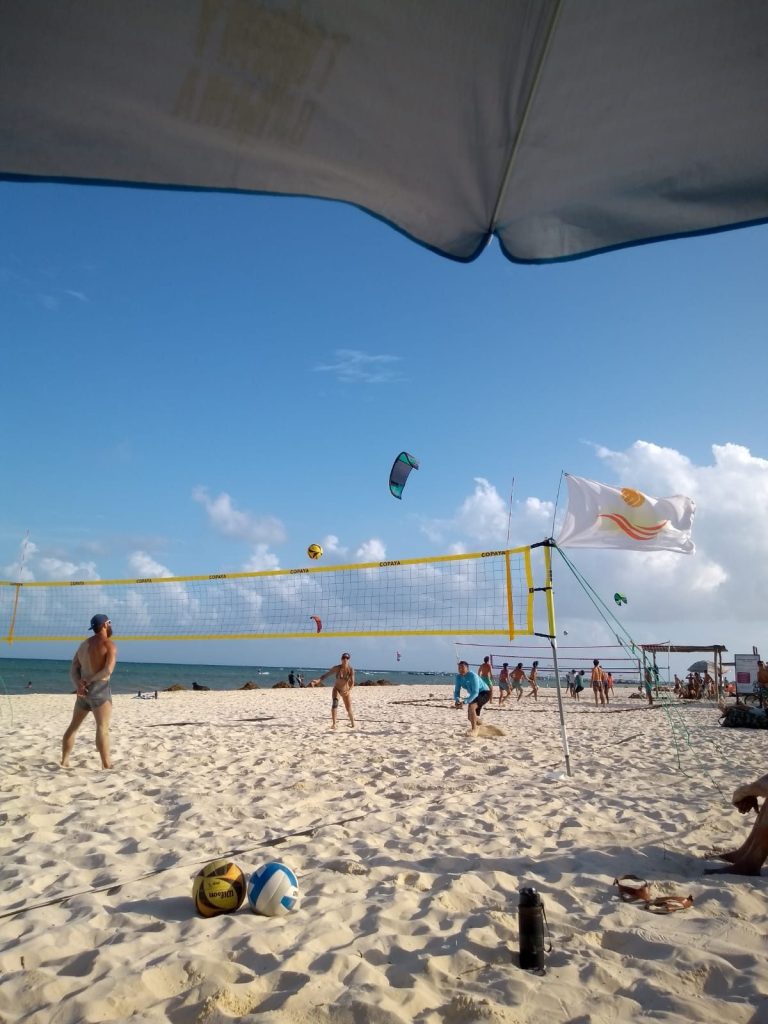
A strong, shifting wind across Colosio beach created instability on every ball. Direction and intensity changed constantly. Even experienced players, even Coach Michael, needed full focus and clean technique to control the game. In these conditions, nothing can be hidden.
This is where the work begins.
Coach Michael made it clear: no excuses. The wind is part of the game. The task is to adapt, stay focused, and solve each situation without mental distraction. That is mental toughness in action.
We welcomed two newer players, Joshua (USA) and Joana (RUI), who were introduced to basic system play and tactical structure. For players coming from casual or fragmented learning, this level of clarity is new. There were questions and uncertainty—but that is the process. Both began to understand the essence of real beach volleyball: not fancy rallies, but building a point with structure and repeatability.
The session moved into structured drills based on match situations: side-out sequences, attacking through position 4, controlled passing, and targeted serving. The focus was on purpose, not just execution. For example, attacking the line corner—done correctly—is a high-percentage solution. These details give clarity and confidence.
With Aleah (USA) and Jesus (MEX) joining, the group found balance—experience stabilizing, new players bringing energy and questions.
In gameplay, Gio (ITA) and Alex (MEX) integrated, with Coach Michael guiding actively on court. Changing team setups forced adaptation, communication, and real teamwork.
Weaknesses became visible—but so did strengths. Through the team, both were exposed and understood.
In the end, the work is yours—but your coach and teammate make it visible and elevate it.
This is what Tuesday stands for:
real conditions, real feedback, real development.
No excuses. No shortcuts. Just work.
Well done to all
Las sesiones de voleibol de los martes no se tratan de comodidad—se tratan de conciencia. Y hoy, los jugadores lo entendieron.
No se trata simplemente de jugar el juego. Se trata de jugar con consciencia y entendimiento. Cuando alcanzas ese nivel, las “pelotas sorpresa” dejan de ser sorpresas—empiezas a leer el juego y anticipar el flujo del partido. Ves claramente dónde están tus debilidades y dónde comienzan tus fortalezas. Todos los que entran a la cancha comparten el mismo objetivo: mejorar. Pero eso solo ocurre en un entorno real—enfocado en el desarrollo, no en el cuidado, no en distracciones comerciales. Ese es el momento en que el jugador interior comienza a despertar.
Hoy, las condiciones lo dejaron claro.
Un viento fuerte y cambiante en la playa de Colosio creó inestabilidad en cada balón. La dirección y la intensidad cambiaban constantemente. Incluso para jugadores experimentados, incluso para el Coach Michael, controlar el balón requería máxima concentración y técnica limpia. En estas condiciones, nada se puede ocultar.
Aquí es donde comienza el trabajo.
El Coach Michael dejó algo claro: no hay excusas. El viento es parte del juego. La tarea es adaptarse, mantenerse enfocado y resolver cada situación sin distracciones mentales. Esto es fortaleza mental en acción.
Dimos la bienvenida a dos jugadores nuevos, Joshua (USA) y Joana (RUI), quienes fueron introducidos a los fundamentos del sistema de juego y la estructura táctica. Para jugadores que vienen de experiencias más casuales o de aprendizaje fragmentado, este nivel de claridad es nuevo. Hubo preguntas, hubo incertidumbre—pero ese es el proceso. Ambos comenzaron a entender la esencia del voleibol de playa real: no se trata de intercambios vistosos, sino de construir un punto con estructura y repetición.
La sesión continuó con ejercicios estructurados basados en situaciones reales de juego: secuencias de side-out, ataque por posición 4, recepción controlada y saques dirigidos. El enfoque no fue solo la ejecución, sino el propósito. Por ejemplo, atacar la línea—cuando se hace correctamente—es una opción de alto porcentaje. Estos detalles generan claridad y confianza.
Con la incorporación de Aleah (USA) y Jesús (MEX), el grupo encontró equilibrio—la experiencia aportando estabilidad, y los nuevos jugadores energía y preguntas.
En la parte de juego, Gio (ITA) y Alex (MEX) se integraron, con el Coach Michael guiando activamente dentro de la cancha. Los cambios constantes de equipo exigieron adaptación, comunicación y verdadero trabajo en equipo.
Las debilidades se hicieron visibles—pero también las fortalezas. A través del equipo, ambas se expusieron y se comprendieron.
Al final, el trabajo es tuyo—pero tu entrenador y tu compañero lo hacen visible y lo elevan.
Esto es lo que representa el martes:
condiciones reales, retroalimentación real, desarrollo real.
Sin excusas. Sin atajos. Solo trabajo.
Bien hecho a todos.
Volleyball Member Engagement Report – Beach Volleyball
what a normal windy tuesday volley session reveals weakness, strength, and real human connection
Date: March 31st, 2026
Report Update
Very often I hear the same explanation, especially during tournaments:
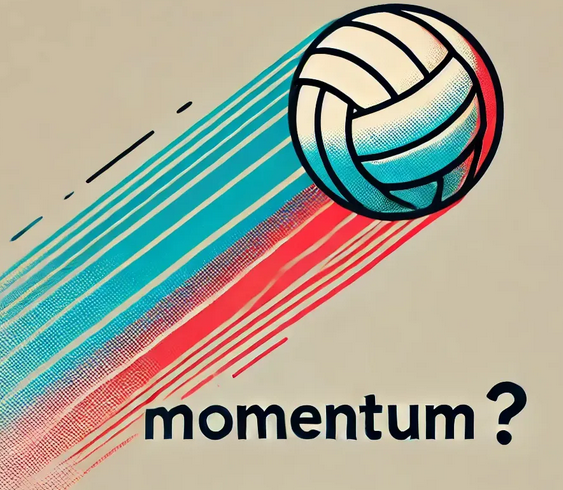
“The opponent has the momentum.”
In beach volleyball, where there is usually no coach allowed on the court, players are responsible for solving situations themselves. In these moments, many look for simple explanations when points are lost. “Momentum” becomes the excuse.
Yes, I understand why people say it. It helps to describe what they see. But if you want to improve as a player, you must stay closer to reality.
Momentum is not something you can control. That already makes it useless for you.
What you can control is much more important: your execution, your focus, and your discipline.
When the game starts to slip, it is never because of “momentum.” It is because small details break down. The pass is slightly off. Decisions become rushed. Communication becomes quiet. One mistake leads to another, and suddenly a sequence of lost points appears. People call this momentum—but in reality, it is a loss of structure.
So the real question for every player is simple:
Where did we lose control of the basics?
This is where your focus must be.
Your role as a player is to stay stable when others become emotional. When the opponent scores points, you do not react emotionally—you reset. You return to your structure. You trust your training. You keep your game simple and clear.
This is the difference between developing players and serious players. Serious players do not chase the game. They do not follow noise or emotions. They bring themselves back, point by point, into control of the match.
As a leader—on or off the court—you set the tone. Not through words, but through behavior. Calm. Focused. Present. You show your partner that nothing has changed. It is still the same game, the same actions, the same responsibility.
So do not look for momentum. Do not wait for it to come back.
Instead, ask yourself:
Am I doing the right things consistently under pressure?
If the answer is yes, the results will follow.
If not, that is where the work begins.
Simple as that.
Coach Michael
Muy a menudo escucho la misma explicación, especialmente durante los torneos:
“El rival tiene el momentum.”
En el voleibol de playa, donde normalmente no hay entrenador en la cancha, los jugadores son responsables de resolver las situaciones por sí mismos. En estos momentos, muchos buscan explicaciones simples cuando pierden puntos. El “momentum” se convierte en la excusa.
Sí, entiendo por qué la gente lo dice. Ayuda a describir lo que ven. Pero si realmente quieres mejorar como jugador, debes mantenerte más cerca de la realidad.
El “momentum” no es algo que puedas controlar. Y eso ya lo hace inútil para ti.
Lo que sí puedes controlar es mucho más importante: tu ejecución, tu enfoque y tu disciplina.
Cuando el juego empieza a escaparse, nunca es por el “momentum”. Es porque los pequeños detalles fallan. La recepción no es precisa. Las decisiones se aceleran. La comunicación desaparece. Un error lleva a otro, y de repente aparece una racha de puntos en contra. A eso la gente le llama “momentum”, pero en realidad es una pérdida de estructura.
Entonces, la pregunta real para cada jugador es simple:
¿Dónde perdimos el control de lo básico?
Ahí es donde debe estar tu enfoque.
Tu rol como jugador es mantenerte estable cuando otros se vuelven emocionales. Cuando el rival suma puntos, no reaccionas emocionalmente—te reajustas. Regresas a tu estructura. Confías en tu entrenamiento. Mantienes tu juego simple y claro.
Esa es la diferencia entre jugadores en desarrollo y jugadores serios. Los jugadores serios no persiguen el partido. No siguen el ruido ni las emociones. Se traen de vuelta, punto por punto, al control del juego.
Como líder—dentro o fuera de la cancha—marcas el tono. No con palabras, sino con tu comportamiento. Tranquilo. Enfocado. Presente. Le demuestras a tu compañero que nada ha cambiado. Sigue siendo el mismo juego, las mismas acciones, la misma responsabilidad.
Así que no busques el “momentum”. No esperes a que regrese.
En cambio, pregúntate:
¿Estoy haciendo lo correcto de manera consistente bajo presión?
Si la respuesta es sí, los resultados llegarán.
Si no, ahí es donde empieza el trabajo.
Así de simple.
Coach Michael
Volleyball Member Engagement Report – Motivation
Coach Michael’s motivation for upcoming tournaments: stay with reality, not “Momentum”
written by Coach Michael; Date: March 28th, 2026