“Life is a journey, not a destination.”
Ralph Waldo Emerson, (1803 - 1882)

Motivation Report

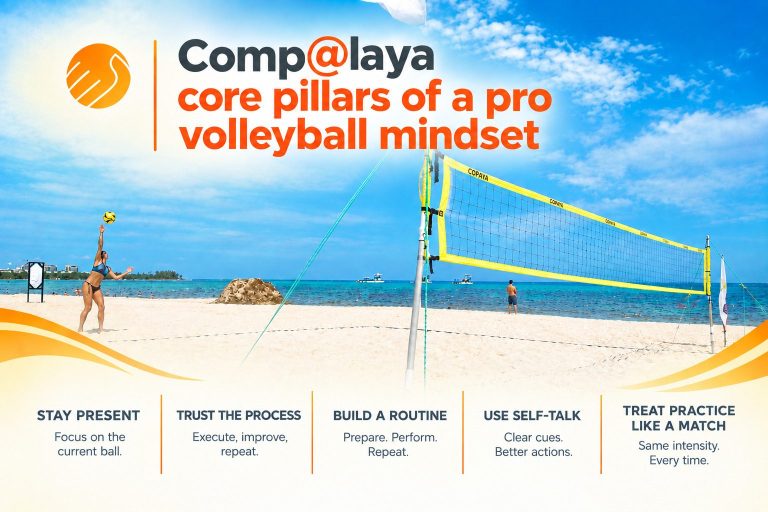
You cannot build a professional athlete by training only the body.
Train the mind.
Stay present.
Error? Next ball.
Blocked? Next ball.
Great play? Next ball.
The past is over. Your next action is what matters.
Trust the process.
Forget the scoreboard. Focus on execution:
Footwork. Technique. Positioning. Decision-making. Communication.
Do your job. Let the result follow.
Build your routine.
Professionals do not wait for motivation.
Breathe. Reset. Focus. Execute.
Your routine must hold when pressure rises.
Control your self-talk.
Replace doubt with instruction.
Not: “I hope I don't miss.”
Instead: “Fast feet.” “See the ball.” “Strong platform.” “Finish.”
Give yourself an action. Execute.
Train like it matters.
Tuesday practice - game play is not separate from match day.
Your standards should never depend on the importance of the match.
Every repetition builds the athlete you become.
The standard
Don't ask, “Was today's practice important?”
Ask: “Did I train today like the athlete I want to become?”
That is the professional mindset.
Stay present. Trust the process. Control what you can control. Execute.
The athlete is built before the match ever begins.

No puedes construir un atleta profesional entrenando solamente el cuerpo.
Entrena la mente.
Mantente presente.
¿Error? Siguiente balón.
¿Bloqueado? Siguiente balón.
¿Gran jugada? Siguiente balón.
El pasado ya terminó. Lo que importa es tu próxima acción.
Confía en el proceso.
Olvídate del marcador. Concéntrate en la ejecución:
Trabajo de pies. Técnica. Posicionamiento. Toma de decisiones. Comunicación.
Haz tu trabajo. Deja que el resultado sea la consecuencia.
Construye tu rutina.
Los profesionales no esperan a tener motivación.
Respira. Reinicia. Concéntrate. Ejecuta.
Tu rutina debe mantenerse cuando aumenta la presión.
Controla tu diálogo interno.
Reemplaza la duda por instrucciones.
No: “Espero no fallar.”
En cambio: “Pies rápidos.” “Mira el balón.” “Plataforma firme.” “Termina el movimiento.”
Dite una acción. Ejecútala.
Entrena como si importara.
El entrenamiento del martes — el juego — no está separado del día del partido.
Tus estándares nunca deben depender de la importancia del partido.
Cada repetición construye al atleta en el que te estás convirtiendo.
El estándar
No preguntes: “¿Fue importante el entrenamiento de hoy?”
Pregunta: “¿Entrené hoy como el atleta en el que quiero convertirme?”
Esa es la mentalidad profesional.
Mantente presente. Confía en el proceso. Controla lo que puedes controlar. Ejecuta.
El atleta se construye mucho antes de que comience el partido.
Volleyball Member Engagement Report – pro volleyball mindset
how to build the professional athlete mindset at Comp@laya
a helping Coach’s Michael guide to your game play
Date:September 25th, 2026
Motivation Report
In our Tuesday Volley sessions, we focus on two key areas for improvement where players show continuous performance deficits that affect their game play:
Direction change – recognising when the ball changes trajectory and quickly stopping and replacing the original movement.
Spatial awareness – judging the ball, distance, court boundaries and positioning while dealing with wind, sun, light and sand.
The first movement is not always the correct movement.
professional indoor volleyball methodology – CMIT & SACT adaptations
Elements of Coach Dr. Kamil’s Performance & Rehabilitation indoor session work on CMIT and SACT are being adapted specifically for beach volleyball.
CMIT – Cognitive-Motor Inhibition Training focus:
Develops the ability to suppress or modify a planned movement when the situation changes.
See → recognise → inhibit → reorganise → move.
SACT – Spatial Awareness Calibration Training focus:
Develops accurate judgement of the relationship between ball, player and playing space.
Ball → trajectory → space → position → decision.
The principles transfer, but the demands change. Beach volleyball adds wind, sun, light, sand, open space and unpredictable trajectories.
tuesday volley beach session challenge
The game-play phase of the session naturally includes uncertainty.
When the ball changes: adjust.
When the wind changes the trajectory: adjust.
When the first movement is wrong: stop, reorganise, move again.
When visual conditions change: adjust.
Mistakes are part of learning:
Recognise → understand → correct → try again.
Perfection is not the target.
Better decisions under changing conditions are the target.
The game will change. The response must change with it.
Stay Motivated. Keep Learning. Keep Adapting.
Coach Michae
En nuestras sesiones de Tuesday Volley, nos enfocamos en dos áreas clave de mejora donde los jugadores muestran déficits continuos de rendimiento que afectan su juego:
Cambio de dirección – reconocer cuando el balón cambia de trayectoria y detener rápidamente el movimiento original para reemplazarlo.
Conciencia espacial – valorar el balón, la distancia, los límites de la cancha y la posición mientras se enfrentan al viento, el sol, la luz y la arena.
El primer movimiento no siempre es el movimiento correcto.
metodología profesional de voleibol de sala – adaptaciones de CMIT & SACT
Elementos del trabajo de Coach Dr. Kamil en sus sesiones de Rendimiento y Rehabilitación de voleibol de sala sobre CMIT y SACT se están adaptando específicamente al voleibol de playa.
CMIT – enfoque de Entrenamiento de Inhibición Cognitivo-Motora:
Desarrolla la capacidad de suprimir o modificar un movimiento planificado cuando la situación cambia.
Ver → reconocer → inhibir → reorganizar → moverse.
SACT – enfoque de Entrenamiento de Calibración de la Conciencia Espacial:
Desarrolla una valoración precisa de la relación entre balón, jugador y espacio de juego.
Balón → trayectoria → espacio → posición → decisión.
Los principios se transfieren, pero las exigencias cambian. El voleibol de playa añade viento, sol, luz, arena, espacio abierto y trayectorias impredecibles.
desafío de la sesión de Tuesday Volley en la playa
La fase de juego de la sesión incluye naturalmente situaciones de incertidumbre.
Cuando el balón cambia: ajusta.
Cuando el viento cambia la trayectoria: ajusta.
Cuando el primer movimiento es incorrecto: detente, reorganiza y vuelve a moverte.
Cuando cambian las condiciones visuales: ajusta.
Los errores son parte del aprendizaje:
Reconocer → comprender → corregir → intentarlo de nuevo.
La perfección no es el objetivo.
El objetivo es tomar mejores decisiones ante condiciones cambiantes.
El juego cambiará. La respuesta debe cambiar con él.
Mantente Motivado. Sigue Aprendiendo. Sigue Adaptándote

Volleyball Member Engagement Report – CMIT & SACT
adapt when the game changes on tuesday volley sessions
a helping Coach’s Michael guide to your game play
Date:September 10th, 2026
Motivation Report
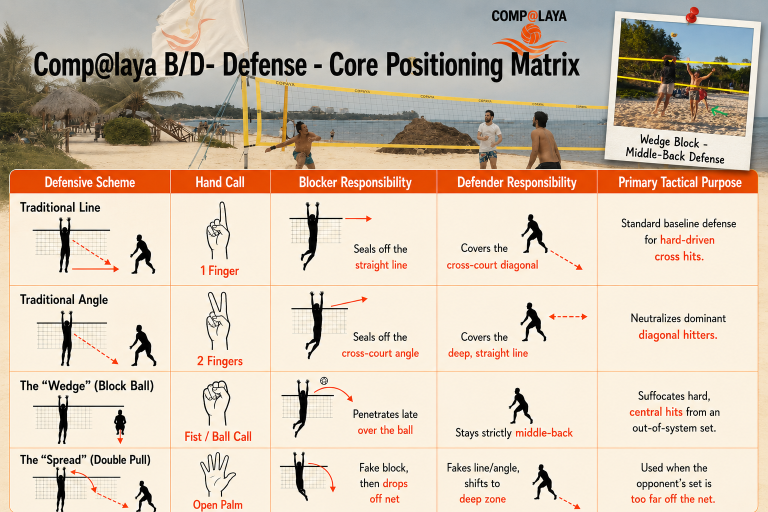
Why Positioning Matters Beach volleyball defense is a two-player system.
The blocker and defender must know their responsibility before the opponent attacks.
The blocker takes away one area. The defender covers the other.
Good defense is not about covering everything. It is about working together.
Line – 1 Finger
The blocker takes the straight line. The defender covers the cross-court area.
Simple rule: Block line. Defend angle. This is a basic defensive system against a strong cross-court attack.
Angle – 2 Fingers
The blocker takes the cross-court angle. The defender covers the straight line.
Simple rule: Block angle. Defend line.
This is useful when the opponent has a strong diagonal attack.
Wedge – Fist
The blocker moves late over the ball. The defender stays middle-back.
The goal is to stop a hard attack through the middle, especially when the opponent has an out-of-system set.
Simple rule: Block the ball. Protect the middle. The defender must not leave the middle too early.
Spread – Open Hand
The blocker shows a block but then moves away from the net. The defender also moves deeper.
This is useful when the opponent's set is too far from the net for a normal block.
Simple rule: Do not force the block. Defend the space.
The Important Point
The hand signal is only the beginning. Both players must understand:
Who blocks? Who defends? Where do we move? What are we trying to take away?
The defender must read the attacker and adapt to the situation. The blocker must also adapt if the attack develops differently than expected.
Coach Michael's Rule
The blocker takes something away. The defender takes responsibility for what is left. This is how two individual players become one defensive system. The goal is not to defend the whole court. The goal is to make the court smaller for the opponent.
Call → Position → Read → Adapt → Defend
This is practical beach volleyball defense
Por qué es importante el posicionamiento
La defensa en voleibol de playa es un sistema de dos jugadores.
El bloqueador y el defensor deben conocer su responsabilidad antes de que el oponente ataque.
El bloqueador elimina una zona. El defensor cubre la otra.
Una buena defensa no consiste en cubrir todo. Consiste en trabajar juntos.
Línea – 1 Dedo
El bloqueador toma la línea recta. El defensor cubre la zona diagonal.
Regla simple: Bloquea línea. Defiende diagonal.
Este es un sistema defensivo básico contra un ataque diagonal fuerte.
Ángulo – 2 Dedos
El bloqueador toma el ángulo diagonal. El defensor cubre la línea recta.
Regla simple: Bloquea ángulo. Defiende línea.
Esto es útil cuando el oponente tiene un ataque diagonal fuerte.
Wedge – Puño
El bloqueador se mueve tarde sobre el balón. El defensor permanece en el centro y atrás.
El objetivo es detener un ataque fuerte por el centro, especialmente cuando el oponente tiene un pase o colocación fuera de sistema.
Regla simple: Bloquea el balón. Protege el centro. El defensor no debe abandonar el centro demasiado pronto.
Spread – Mano abierta
El bloqueador muestra el bloqueo, pero después se aleja de la red. El defensor también se mueve más atrás.
Esto es útil cuando la colocación del oponente está demasiado alejada de la red para realizar un bloqueo normal.
Regla simple: No fuerces el bloqueo. Defiende el espacio.
El punto importante
La señal con la mano es solo el comienzo. Ambos jugadores deben entender:
¿Quién bloquea? ¿Quién defiende? ¿Hacia dónde nos movemos? ¿Qué estamos intentando eliminar?
El defensor debe leer al atacante y adaptarse a la situación. El bloqueador también debe adaptarse si el ataque se desarrolla de manera diferente a lo esperado.
La regla del Coach Michael
El bloqueador elimina una opción. El defensor asume la responsabilidad de lo que queda. Así es como dos jugadores individuales se convierten en un solo sistema defensivo. El objetivo no es defender toda la cancha. El objetivo es hacer que la cancha sea más pequeña para el oponente.
Llamar → Posicionar → Leer → Adaptar → Defender
Esta es la defensa práctica del voleibol de playa.
Volleyball Member Engagement Report – motivation
Comp@laya B/D defense core positioning matrix
a helping Coach’s Michael guide to your game play
Date: September 05th, 2026
Motivation Report
When Swedish beach volleyball players Ahman and Hellvig talk about their partnership, they often point to something deeper than technique: knowing what their partner is going to do and understanding how he is reading the situation.
This is exactly where the Comp@laya idea of Collective Adhesion and Adaptive Learning becomes practical.
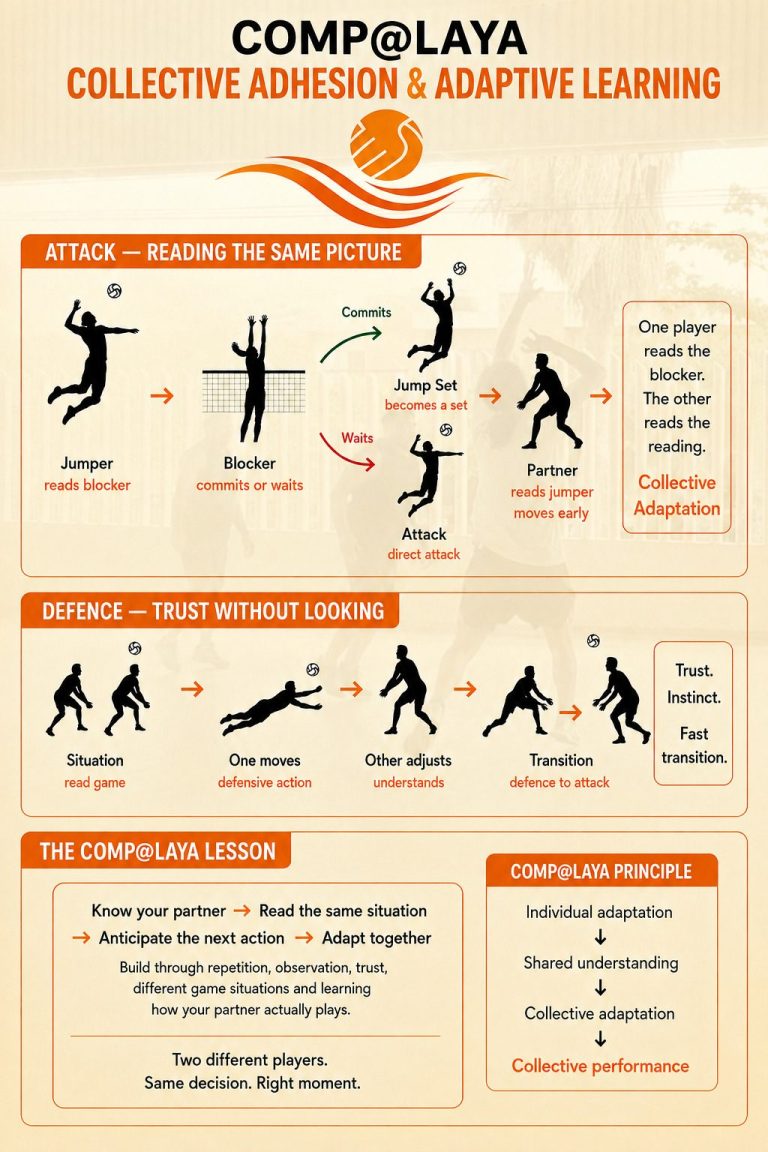
ATTACK — READING THE SAME PICTURE
In their discussions about the Swedish Jump Set, the important point is not simply that one player jumps and can attack or set.
The jumper is reading the blocker at the last moment, while the partner is simultaneously reading the same defensive situation.
If the blocker commits, the jump becomes a set.
If the blocker waits, the jumper can attack.
As they have explained in interviews, their advantage comes from knowing each other's intentions and being ready for the next decision without needing to communicate verbally.
The partner is already moving because he understands what the jumper is seeing.
One player reads the blocker. The other reads his partner reading the blocker.
That is collective adaptation.
DEFENCE — TRUST WITHOUT LOOKING
Their feedback also highlights how years of playing and training together create an instinctive understanding of positioning and movement.
They know each other's speed, reach and defensive habits.
They do not always need to look or call.
One player moves — the other understands what that movement means.
A defensive action can therefore become an immediate transition into attack.
There is less hesitation because the players already understand the likely next action.
THE COMPA@LAYA LESSON
Åhman and Hellvig's example is not about copying their Jump Set.
It is about understanding why their partnership works.
Their own feedback points toward a simple principle:
Know your partner → read the same situation → anticipate the next action → adapt together.
You cannot build this from one training session.
It comes from repetition, observation, trust, different game situations and learning how your partner actually plays.
The objective is not to become two identical players.
The objective is to become two different players who can make the same decision at the right moment.
That is the Comp@laya principle:
Individual adaptation → shared understanding → collective adaptation → collective performance.
Cuando los jugadores suecos de voleibol de playa David Åhman y Jonatan Hellvig hablan de su asociación, a menudo señalan algo más profundo que la técnica: saber qué va a hacer tu compañero y entender cómo está leyendo la situación.
Esto es exactamente donde la idea de Adhesión Colectiva y Aprendizaje Adaptativo de Comp@laya se vuelve práctica.
ATAQUE — LEER LA MISMA SITUACIÓN
En sus conversaciones sobre el Jump Set sueco, lo importante no es simplemente que un jugador salte y pueda atacar o colocar.
El jugador que salta está leyendo al bloqueador en el último momento, mientras su compañero está leyendo simultáneamente la misma situación defensiva.
Si el bloqueador se compromete, el salto se convierte en una colocación.
Si el bloqueador espera, el jugador puede atacar.
Como han explicado en entrevistas, su ventaja viene de conocer las intenciones del otro y estar preparados para la siguiente decisión sin necesidad de comunicarse verbalmente.
El compañero ya se está moviendo porque entiende lo que está viendo el jugador que salta.
Un jugador lee al bloqueador. El otro lee a su compañero leyendo al bloqueador.
Eso es adaptación colectiva.
DEFENSA — CONFIAR SIN MIRAR
Sus comentarios también destacan cómo años de jugar y entrenar juntos crean un entendimiento instintivo del posicionamiento y del movimiento.
Conocen la velocidad, el alcance y los hábitos defensivos del otro.
No siempre necesitan mirarse ni hacer una llamada.
Un jugador se mueve — el otro entiende lo que ese movimiento significa.
Una acción defensiva puede convertirse inmediatamente en una transición al ataque.
Hay menos dudas porque los jugadores ya entienden cuál probablemente será la siguiente acción.
LA LECCIÓN DE COMPA@LAYA
El ejemplo de Åhman y Hellvig no consiste en copiar su Jump Set.
Se trata de entender por qué funciona su asociación.
Sus propios comentarios apuntan hacia un principio sencillo:
Conoce a tu compañero → lee la misma situación → anticipa la siguiente acción → adáptense juntos.
Esto no se puede construir en una sola sesión de entrenamiento.
Se desarrolla mediante repetición, observación, confianza, diferentes situaciones de juego y aprendiendo cómo juega realmente tu compañero.
El objetivo no es convertirse en dos jugadores idénticos.
El objetivo es convertirse en dos jugadores diferentes que puedan tomar la misma decisión en el momento correcto.
Ese es el principio de Comp@laya:
Adaptación individual → entendimiento compartido → adaptación colectiva → rendimiento colectivo.
Volleyball Member Engagement Report – motivation
collective adhesion, in learning to read your partner - example swedish "Jump Set"
a helping Coach’s Michael guide to your game play
Date: August 28th, 2026
Coach's Feedback Report
I hear this question many times, especially from local players who have played for one or two years but are still almost at the same level:
“How do I get more practical experience?”
My answer is simple:
It is not enough just to play.
Playing gives you experience, but bad practice gives you bad experience. Without structure, feedback and learning, you can play for years and keep making the same mistakes.
There are four areas that help players gain real practical experience:
Game-like training.
Deliberate practice.
Tactical understanding.
Physical preparation.
Learn Through the Game
Volleyball is never the same. The serve, set, attack, opponent and teammate are always changing.
This is why players need more than isolated drills.
Learn to read and react.
Train with real serves, real attacks, real blocks and real defensive pressure. Add fatigue, time pressure and different situations.
The game must be part of the learning.
Practice With a Purpose
There is a difference between playing for two hours and training for two hours.
Every training session should have a purpose.
Maybe it is better reception, serving to a specific player, better transition or better defense.
Get feedback. Make an adjustment. Try again.
Mistakes are normal. Repeating the same mistake without learning from it is not.
At the end of training, ask yourself:
What did I improve?
What did I do wrong?
What do I need to improve next?
That is real practice.
Learn to See the Game
Beginners often watch only the ball.
Experienced players watch the whole situation.
Look at the set, the attacker's approach, body position, blocker, defense and open space.
Ask yourself:
“What will probably happen next?”
This is how you develop game understanding.
Experience means learning to see the situation before it happens.
Prepare Your Body
You cannot play good volleyball if your body cannot handle the demands of the game.
You need jumping, acceleration, stopping, changing direction and repeated reactions.
Your body must be ready when the game becomes difficult.
The Problem I See Too Often
I see players who have been playing for more than a year but are still very close to where they started.
Why?
Because playing alone is not education.
When proper volleyball education is missing, players copy what they see — from other players, social media or self-taught and inexperienced coaches.
Then the focus becomes winning the next game, making spectacular moves and having short-term success.
But a player can win and still have:
bad technique, bad positioning, poor decisions and bad habits.
This is why good coaching and structure matter.
My Advice
If you want more practical experience, do not only ask:
“How many games should I play?”
Ask:
“What am I learning from every game?”
Play with purpose.
Train in realistic situations.
Make mistakes, but learn from them.
Watch the opponent, not only the ball.
Learn to make decisions.
Keep adapting.
Do not confuse being active with improving.
Real practical experience comes from playing, learning, understanding, making decisions and adapting.
Not simply playing more — but learning more every time you play.
Escucho esta pregunta muchas veces, especialmente de jugadores locales que han jugado durante uno o dos años, pero todavía están casi en el mismo nivel:
“¿Cómo puedo obtener más experiencia práctica?”
Mi respuesta es simple:
No es suficiente simplemente jugar.
Jugar te da experiencia, pero una mala práctica te da una mala experiencia. Sin estructura, retroalimentación y aprendizaje, puedes jugar durante años y seguir cometiendo los mismos errores.
Hay cuatro áreas que ayudan a los jugadores a ganar experiencia práctica real:
Entrenamiento similar al juego.
Práctica deliberada.
Comprensión táctica.
Preparación física.
Aprende a través del juego
El voleibol nunca es igual. El saque, el pase, el ataque, el rival y el compañero siempre están cambiando.
Por eso los jugadores necesitan más que ejercicios aislados.
Aprende a leer y reaccionar.
Entrena con saques reales, ataques reales, bloqueos reales y presión defensiva real. Añade fatiga, presión de tiempo y diferentes situaciones.
El juego debe ser parte del aprendizaje.
Practica con un propósito
Hay una diferencia entre jugar durante dos horas y entrenar durante dos horas.
Cada sesión de entrenamiento debe tener un propósito.
Puede ser mejorar la recepción, sacar a un jugador específico, mejorar la transición o mejorar la defensa.
Recibe retroalimentación. Haz un ajuste. Inténtalo de nuevo.
Los errores son normales. Repetir el mismo error sin aprender de él no lo es.
Al final del entrenamiento, pregúntate:
¿Qué mejoré?
¿Qué hice mal?
¿Qué necesito mejorar después?
Eso es práctica real.
Aprende a ver el juego
Los principiantes suelen mirar solamente el balón.
Los jugadores con experiencia observan toda la situación.
Mira el pase, la carrera del atacante, la posición del cuerpo, el bloqueo, la defensa y los espacios libres.
Pregúntate:
“¿Qué probablemente sucederá después?”
Así desarrollas la comprensión del juego.
La experiencia significa aprender a ver la situación antes de que ocurra.
Prepara tu cuerpo
No puedes jugar bien al voleibol si tu cuerpo no puede soportar las exigencias del juego.
Necesitas saltar, acelerar, frenar, cambiar de dirección y reaccionar repetidamente.
Tu cuerpo debe estar preparado cuando el juego se vuelve difícil.
El problema que veo demasiado a menudo
Veo jugadores que llevan más de un año jugando, pero todavía están muy cerca del nivel donde comenzaron.
¿Por qué?
Porque jugar por sí solo no es educación.
Cuando falta una verdadera educación de voleibol, los jugadores copian lo que ven — de otros jugadores, de las redes sociales o de entrenadores autodidactas y sin suficiente experiencia.
Entonces el enfoque se convierte en ganar el próximo partido, hacer movimientos espectaculares y conseguir resultados a corto plazo.
Pero un jugador puede ganar y todavía desarrollar:
mala técnica, mala posición, malas decisiones y malos hábitos.
Por eso un buen entrenamiento y una estructura adecuada son importantes.
Mi consejo
Si quieres más experiencia práctica, no preguntes solamente:
“¿Cuántos partidos debería jugar?”
Pregúntate:
“¿Qué estoy aprendiendo de cada partido?”
Juega con propósito.
Entrena en situaciones reales.
Comete errores, pero aprende de ellos.
Observa al rival, no solamente el balón.
Aprende a tomar decisiones.
Sigue adaptándote.
No confundas estar activo con estar mejorando.
La experiencia práctica real viene de jugar, aprender, comprender, tomar decisiones y adaptarse.
No se trata simplemente de jugar más — sino de aprender más cada vez que juegas.
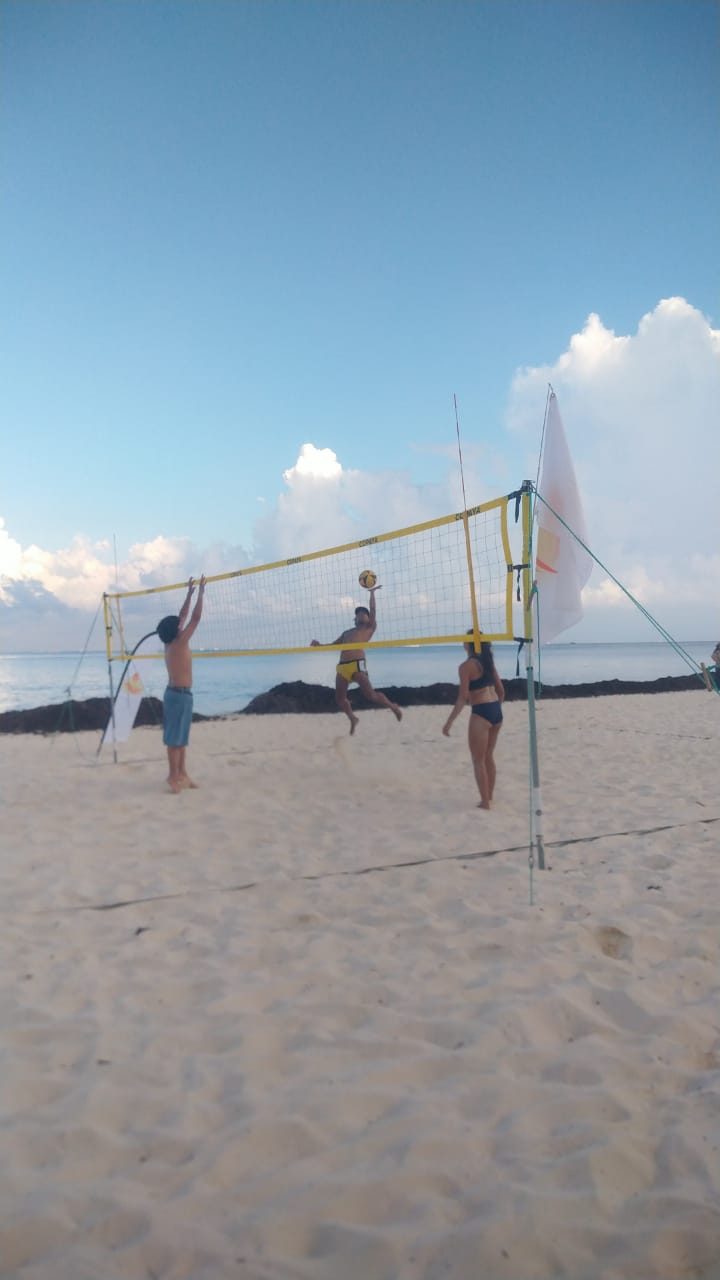
Volleyball Member Engagement Report – gain real practical experience
how do you gain real practical experience (C-B-A categories) in volleyball?
a helping Coach's Michael to guide your game play
Date: September 2nd 2026